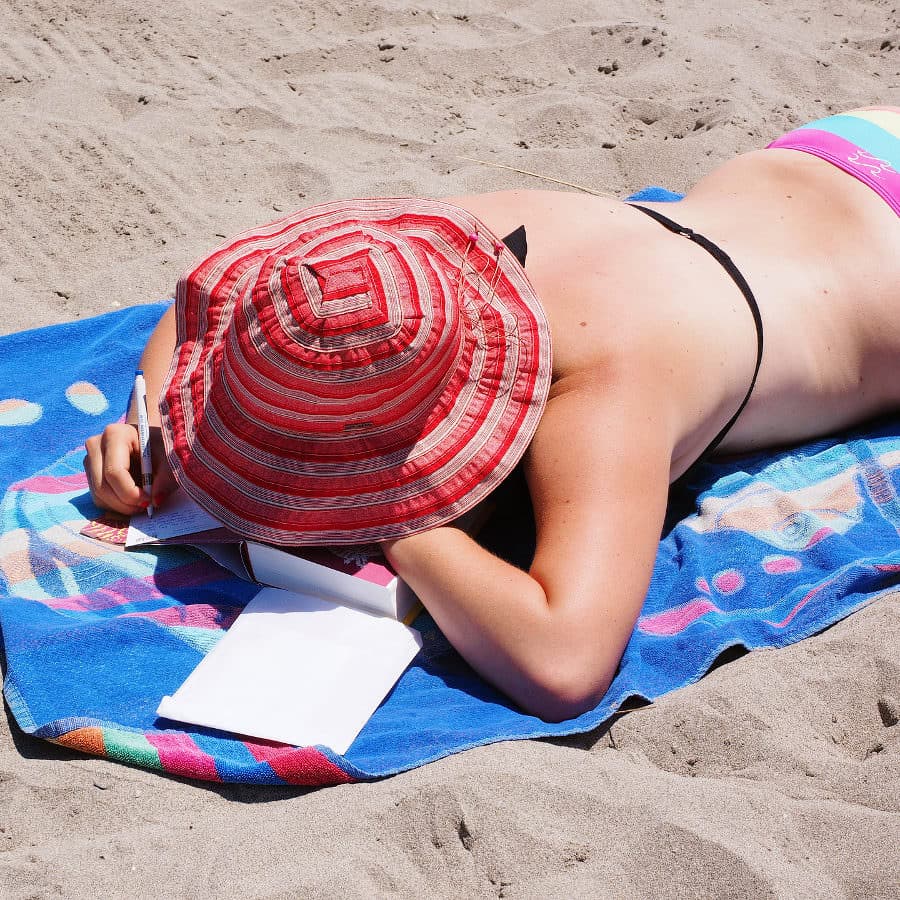
It’s that time of year when people start stocking up on sunscreen. Whether it’s gardening, a trip to the beach, a picnic in the backyard or a game of golf, sunscreen, protective clothing and a good hat are essential to protect your skin from ultraviolet damage. There are lots of sunscreens to choose from, so we won’t make any recommendations other than to suggest mineral-based products containing zinc and/or titanium. Some People’s Pharmacy readers have gone further, though. In addition to sunscreen, they take aspirin. Could this 100+ year-old drug really help prevent sunburn? The science suggests the answer might be yes.
A Reader Reports That Aspirin Was Recommended During WW II
Q. During World War II in the Pacific, British and Australian medics were told to give soldiers aspirin as a substitute for quinine. They quickly learned that the problem of bad sunburns dropped noticeably. I thought you’d find this history interesting.
A. There is indeed evidence that aspirin can help protect the skin from ultraviolet damage. It is quite a bit more recent than WWII (Journal of Investigative Dermatology, Jan. 2023).
Please strap in because this gets very technical. Here is how these researchers introduce their research about how aspirin might help prevent sunburn:
“The anti-inflammatory and chemopreventive activities of aspirin (ASA) are thought to be mediated through its inhibition of cyclooxygenase (COX) enzymes, which catalyze the conversion of arachidonic acid to PGs [prostaglandins]. Consistent with this notion, other COX inhibitors such as indomethacin can block inflammatory responses. Inhibition of COX-2 may be particularly relevant for cancer prevention because COX-2‒specific inhibitors such as celecoxib have shown protection against colon cancer and skin cancer.”
OK…apologies for the technical language in that introduction. The point is, though, that researchers have discovered that nonsteroidal anti-inflammatory drugs (NSAIDs) like aspirin can have unexpected benefits. For one thing, such drugs may have anti-cancer activity. You can read about aspirin vs. cancer at this link.
Aspirin and Cancer: The Overlooked Protection Hiding in Plain Sight
For more than 30 years, evidence linking aspirin against cancer has grown stronger. Why does medicine hesitate to take it seriously?
The authors of the article in the Journal of Investigative Dermatology (January 2023) point out that they had previously shown that aspirin “suppresses UVB-induced inflammation and protects against UVB-induced DNA damage.”
Their new research suggests that there are two different aspirin benefits in protecting against ultraviolet radiation from the sun. One is anti-inflammatory and the other protects against sun-induced DNA damage.
Aspirin may help guard against sunburn, but dermatologists still warn people to use effective sunscreen or protective clothing as well. Chronic sun exposure can lead to photoaging (wrinkles) as well as skin cancers. People who take aspirin appear to be at lower risk for basal cell skin cancers (World Journal of Oncology, Dec. 2022).
Might Aspirin Prevent Sunburn?
A few readers are convinced that the answer is yes. Here is one report.
Q. My spouse and daughter are both natural blondes and their fair skin burns and blisters very easily in the sun. About 15 years ago, they began taking an aspirin if they started to turn pink from being in the sun. They’ve had no blistering or bad burns since we have used aspirin.
We usually take only one aspirin tablet. (My daughter is 30 now; we knew children should not take aspirin.) I have mentioned this approach to people, even nurses, and no one seems to know about it.
A. Sun exposure (ultraviolet radiation) damages the skin in several ways. These include inflammation, oxidative stress and DNA damage. As described above, dermatological researchers have found that aspirin can help protect skin from inflammation caused by ultraviolet radiation (Journal of Investigative Dermatology, Jan. 2021).
Using Aspirin to Prevent Sunburn
Other readers report that aspirin helps to protect their skin.
Q. I have a home remedy to prevent sunburn and you may not have heard of it. About an hour before I go into the sun, I take three aspirin. Then I swallow an additional aspirin each hour I stay out after the first one, stopping an hour before I end my sun exposure.
I am usually in the sun for four to six hours at a time, once or twice a month during the summer. Most of that time is in direct sunlight. In case you are wondering, my ancestry is from northern Europe, and I am paper white. I usually get a little pink, but do not burn, hurt or peel.
A. Your remedy is unusual, but several years ago we heard from someone else who found aspirin helpful against sunburn. That prompted us to search the medical literature for studies.
Some Scientists Agree That Aspirin Helps Prevent Sunburn:
Relatively little research has been done, but a German study found that pretreatment with 250 mg of aspirin prevented sunburn (Photochemistry and Photobiology, Oct., 2001). That’s a lot lower than the dose you take, which could cause serious stomach damage.
That much aspirin could cause both stomach irritation and an increased risk for bleeding. You should discuss your regimen with your physician! Aspirin can also interact with other medications.
The Dangers of Aspirin
Katie wrote about her close call due to aspirin:
“I had a personal experience with internal bleeding from a prescribed aspirin regimen. I had no problems for five years–1/4 pill (approx 80 mg) per day. But when the bleeding started, I felt bad, and then good again, so thought nothing was wrong.
“The evidence was there, but I thought the problem would go away. Finally, I could barely move and had to be taken to Emergency (my hemoglobin count was 7.1, but 11 to 15 is normal). I spent 7 days in ICU, received 15 red blood transfusions, etc. The bleeding was intermittent, so we never found the actual “spot” or cause, other than it was from my upper GI tract.
“Aspirin is wonderful for heart issues if you are at risk. But because there are safer and better remedies for sun blocking, aspirin should be saved for real health problems.”
Final Words
Scientists from Estée Lauder also presented evidence that topical salicylic acid could protect skin from ultraviolet radiation damage (Journal of Cosmetic Science, Mar-Apr, 2006). Salicylic acid is available in some over-the-counter acne preparations, but it is not promoted for burn prevention.
To prevent sunburn most effectively, avoid midday sun and use protective clothing and sunscreen. Taking aspirin first is certainly an interesting addition to this approach, but only after checking with a physician to make sure it would be safe.
Citations
- Rahman H et al, "Aspirin protects melanocytes and keratinocytes against UVB-induced DNA damage In Vivo." Journal of Investigative Dermatology, Jan. 2021. DOI: 10.1016/j.jid.2020.06.003
- Rahman H et al, "Aspirin protects against UVB-induced DNA damage through activation of AMP kinase." Journal of Investigative Dermatology, Jan. 2023. DOI: 10.1016/j.jid.2022.07.011
- Grundmann JU et al, "UV erythema reducing capacity of mizolastine compared to acetylsalicylic acid or both combined in comparison to indomethacin." Photochemistry and Photobiology, Oct., 2001. DOI: 10.1562/0031-8655(2001)074<0587:uercom>2.0.co;2
- Mammone T et al, "Salicylic acid protects the skin from UV damage." Journal of Cosmetic Science, Mar-Apr, 2006.