
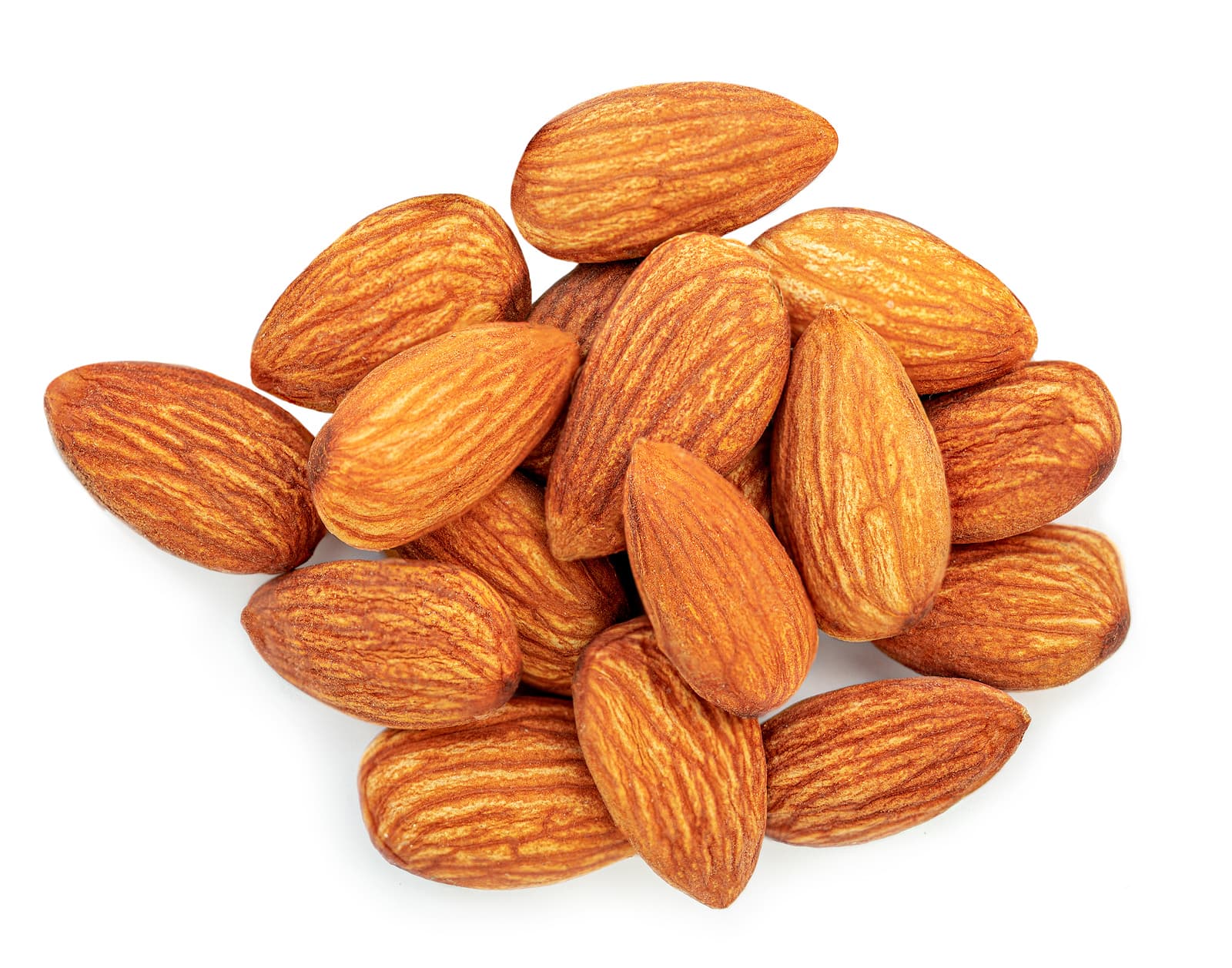
Many people use over-the-counter acid-suppressing drugs to ease the uncomfortable symptoms of heartburn, indigestion or acid reflux. Medicines such as omeprazole (Prilosec OTC) or esomeprazole (Nexium24HR) are potent, but they also carry the potential for adverse reactions. You can read more about those here. When you do, you will probably understand why some readers search for alternatives to these proton pump inhibitors (PPIs). Certain individuals report that almonds help heartburn at least as much as a PPI.
Eating Almonds to Banish Heartburn
Q. When I learned about the side effects of strong acid-suppressing drugs, I knew I didn’t want to take them any more. I researched nutritional means of controlling heartburn.
I was surprised to learn that eating almonds is highly effective against indigestion. As a bonus, these nuts are a health food with no undesirable side effects.
As soon as I stopped taking omeprazole, I had horrible rebound acidity. I ate seven almonds and within a couple of minutes the discomfort was eliminated. I no longer take a proton pump inhibitor (PPI). Instead, when I get heartburn, I just eat almonds. It works every time. Are there any other natural approaches for this problem?
A. We have heard from others that almonds can be helpful for heartburn. Although we have not found randomized controlled trials testing to see if almond help heartburn, we found one study showing that almonds reached the large intestine more quickly than a standard liquid test meal (Journal of Gastrointestinal and Liver Diseases, March 2018). Speeding contents out of the stomach might theoretically reduce the chance for reflux, but we do not know if this has ever been tested. The scientists conducting this study were interested in comparing two different types of almonds, from California and from Apulia, Italy. The Italian almonds were higher in lipids and polyphenols, while the California almonds were more appealing to many of the volunteers. They had similar effects on the digestive tract.
In our book, Recipes & Remedies From The People’s Pharmacy, we describe several other nutritional approaches. They include persimmon punch, mustard and vinegar salad dressing, broccoli and garlic stir fry, ginger pickles, ginger tea and a low-carb diet. This book also contains instructions for managing blood pressure, high cholesterol, blood glucose and arthritic joint pain with food.
Could Almonds Help Heartburn Better Than Meds?
Q. I read about using almonds for heartburn, and I’ve found it works great, better than any over-the-counter medicine I’ve ever tried. (I am leery of the prescription meds due to food allergies and medication sensitivities.)
I have also tried almond milk and almond butter, and both worked just as well. I’ve started keeping a jar of almond butter in my bathroom, for middle-of-the-night heartburn.
A. We have heard from many readers that as few as two almonds can prevent or stop heartburn. (Some take a small handful.) A few readers have also experimented with almond milk and found it beneficial. You are the only one to report keeping almond butter handy for nighttime reflux. Use a small spoon, so you don’t choke. (We have heard from people reporting tragic consequences when a friend or neighbor swallowed a spoonful of peanut butter to battle hiccups and ended up choking on it.)
Just Two Almonds Help Heartburn
Q. I have a new patient with severe heartburn. As a naturopathic physician, I find taking a person off their particular food allergens usually clears heartburn up permanently.
I saw her yesterday and she had a bad episode during our visit. I watched her stop it almost immediately with two almonds. She says it works every time.
A. Your patient is not the first person to report that a few almonds can prevent or stop heartburn.
Last year one reader wrote:
“Almonds after every meal seem to be working for me. I haven’t taken Zantac for the past two weeks and I haven’t even needed much antacid.”
However, another commented:
“Funny, but almonds give me heartburn.”
That certainly highlights the differences among people and their reactions to food. A review on food allergies in the Journal of the American Medical Association (May 12, 2010) suggests that food allergy may not be as common as some people believe, affecting fewer than 10 percent of adults. The authors conclude, though, that more than 2 percent do have food allergies and many others have some food intolerance. Avoiding foods that cause heartburn makes sense.
We heard from another frequent heartburn sufferer.
He wrote:
“I have taken antacids since 16 (I am 68). When the prescription drugs came out, I was delighted. I have taken everything from Tagamet to Nexium, which I have been on for the last 4 years. After reading about the success with almonds, I tried it and was astounded at how effective it was. On my first try, I went for 8 days without Nexium. I would eat 2 or 3 almonds before meals. Now I take Nexium only after a spicy meal.”
Learn More
We include many other home remedies for heartburn in our inexpensive Guide to Digestive Disorders. The Guide also discusses the pros and cons of prescription medications for GERD. Since heartburn is a clear symptom, you can be confident in judging whether or not your remedy is helping.
Citations
- Diella G et al, "Distinct effects of two almond cultivars on agreeability and gastrointestinal motility in healthy subjects: more than mere nutraceuticals." Journal of Gastrointestinal and Liver Diseases, March 2018. DOI: 10.15403/jgld.2014.1121.271.dll

&message=For Some Readers, Almonds Help Heartburn More Than Medicine Does&redirect_asPath=https://www.peoplespharmacy.com/articles/almonds-avert-heartburn-better-than-drugs)